



















The news out of Chapel Hill marks the end of an era that never quite found stable footing. Hubert Davis, a Carolina alum who embraced the weight of the program, is reportedly out as head coach despite a clear desire to remain in the role. By all accounts, Davis wanted to keep building, to prove that his vision could bring UNC back to consistent national prominence. But wanting to stay and being allowed to stay are two very different things at a place like North Carolina. The pressure, both internal and external, had been mounting for some time, and ultimately the administration made the decision many around the sport saw coming.
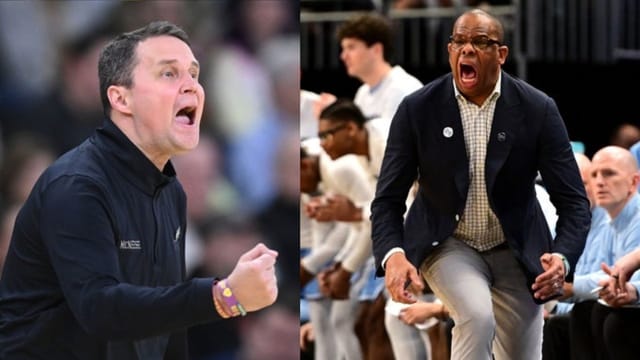
This was not about a lack of passion or connection. Davis understood what it meant to wear Carolina blue, and that mattered. But UNC is not a program that waits patiently through uneven results, especially when expectations are tied to banners and Final Fours. The push to move on felt less like a single moment and more like a slow build that reached its breaking point. In the end, the school chose reset over patience, even if it meant parting ways with someone who genuinely wanted to see it through.
Just down Tobacco Road, NC State may be staring at a different kind of instability. Will Wade arrived with energy, edge, and a clear plan for elevating the Wolfpack. Early signs suggested he was building something real, something that could shift the program’s trajectory in the ACC. But now, with changes in the athletic department at LSU and Wade’s deep ties there, speculation is growing that his time in Raleigh could be shorter than expected.
If Wade does leave, the implications for NC State go beyond wins and losses. It reinforces a perception that the program is a stepping stone rather than a destination. That is a difficult label to shake, especially in a conference where identity and stability matter. Building momentum is hard enough. Maintaining it becomes even tougher when your head coach is seen as a candidate to leave the moment a bigger or more familiar opportunity opens up.
For both programs, this moment highlights different challenges. UNC is trying to reclaim its standard, even if it means making uncomfortable decisions. NC State is trying to establish one once again, but risks losing progress before it fully takes hold. In a sport driven by both tradition and timing, neither situation offers easy answers, and both will shape the balance of power in the ACC moving forward.
